
For much of its history, insurance-linked securities (ILS) were defined by what they were not: not balance-sheet reinsurance, long-term capital, nor particularly flexible. That framing no longer holds with ILS moving away from its traditional use case to shape the market into "one that is more flexible and better positioned to deliver consistent pricing and capacity."
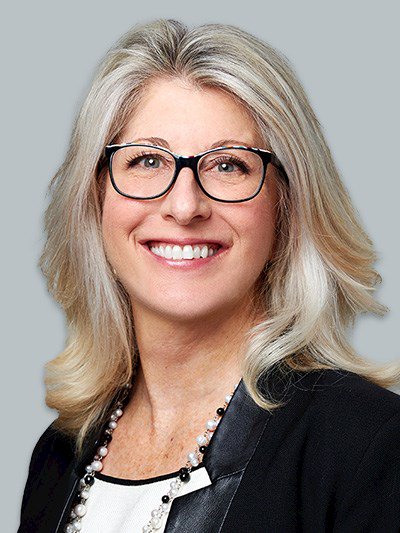
CEO of Artex Capital Solutions Kathleen Faries told Bermuda:Re+ILS, "ILS has clearly moved beyond being a single peril, event-driven market and is now functioning as a broader capital platform."
What began as a focused source of peak peril capacity is now evolving into a broad-based capital platform spanning casualty, cyber, long-tail exposures and hybrid structures. Ahead of the curve, Faries reported that Artex has focused on expanding the range of structures it supports, while aligning more closely with expanding investor appetite.
"This past year has been about pushing the boundaries of what alternative capital can do and making those innovations accessible to more investors," Faries said.
Duration replaces volatility as the attraction.
One of the most significant changes in the ILS market is the growing prominence of casualty risk. Rather than concentrating capital in peak catastrophe layers, investors are increasingly allocating capital to structures that generate steadier cash flows over longer time horizons.
Artex is adapting its strategy, as is the wider market, to meet the growing emphasis on casualty and longer-duration risks. Faries reported that, over the past 12 months, the market has expanded its use of enhanced casualty-focused sidecars and quota shares across its Bermuda and Lloyd's platforms, responding to investor demand focused on a total return strategy, which prioritises frequency and duration rather than severity losses.
The attraction is not simply yield, but predictability. Longer-duration casualty structures allow investors to deploy capital more efficiently, manage assets alongside liabilities and smooth returns across market cycles.
Alongside casualty, Artex is also seeing momentum in fully collateralised, multi-year reinsurance programmes that add flexibility and limit credit exposure. The appeal is twofold: These structures provide cedants with committed capacity while reducing counterparty credit exposure, and they provide investors with clearer visibility into risk and outcomes.
"This approach matters because it brings high-quality, diversified capital into the market, expanding capacity for insurers while giving investors clearer choices in a more complex risk environment," Faries explained.
From product to platform.
With developments reflecting a broader structural evolution, ILS is no longer best understood as a niche corner of the catastrophe market. Instead, it is increasingly functioning as a multi-line capital platform that can support a wide range of risk transfer needs.
Faries sees the force behind this shift toward casualty, cyber, secondary perils and hybrid structures: "These trends are being driven by social inflation, constrained traditional reinsurance capacity and investors seeking return profiles that behave differently from mainstream financial markets."
The result is an ILS market that is both broader and more resilient. What began as a peril-specific solution has evolved into a flexible capacity source that delivers consistent pricing and supports insurers through volatile periods.
Scale with substance.
The growth of the market underlines just how material this shift has been, with Faries noting that "the pace and breadth of growth are materially different than they were five years ago."
Record issuance in the catastrophe bond market, surpassing $25 billion in 2025 alone, has been accompanied by total alternative capital exceeding $120 billion. But of equal significance to scale is how capital is now being deployed.
Years of conversation around casualty ILS have finally landed established deals on the table, which Faries credits to "innovative structures and legacy market exit options," explaining that the market now extends well beyond property catastrophe to include cyber, ESG-linked risks and increasingly, bespoke hybrid transactions.
That broader foundation improves the industry's ability to absorb shocks while offering investors access to more diversified and consistent risk-linked returns.